




Huxley’s Journey Back to Four Strong Paws: Cranial Cruciate Ligament Rupture in Dogs
Huxley, a 7-year-old neutered male Golden Retriever, was presented to our clinic after developing a noticeable lameness in his left hind limb. His owners had observed that for about a week he was reluctant to put full weight on the leg, struggled to rise comfortably, and was less enthusiastic about his usual walks and activities.
Following a thorough orthopedic examination, the cause of Huxley’s discomfort became clear: a cranial cruciate ligament (CCL) rupture in his left knee.
What is a Cranial Cruciate Ligament Rupture?
The cranial cruciate ligament is one of the most important stabilizing structures within a dog's knee joint. It prevents excessive forward movement of the tibia (shin bone) relative to the femur (thigh bone) and helps maintain normal joint function.
When this ligament partially or completely ruptures, the knee becomes unstable, causing pain, inflammation, lameness, and, over time, the development of osteoarthritis.
Unlike people, who often tear their ACL during a sudden sporting injury, dogs commonly develop cruciate ligament disease gradually. The ligament slowly weakens over months or years, and eventually a normal activity such as running, turning, or jumping may result in a complete rupture.
Which Dogs Are Most Commonly Affected?
A cruciate ligament rupture can occur in any dog, but certain breeds are more commonly affected, including:
- Golden Retrievers
- Labrador Retrievers
- Rottweilers
- Bernese Mountain Dogs
- Boxers
- Newfoundland Dogs
- Staffordshire Terriers
Additional risk factors include excess body weight, age-related degeneration, and individual anatomical characteristics of the knee.
What Are the Typical Signs?
Dogs with a cruciate ligament rupture may show:
- Sudden or progressive hind limb lameness
- Difficulty rising from a lying position
- Reluctance to exercise or jump
- Stiffness after rest
- Reduced activity levels
- Muscle loss in the affected limb over time
These were exactly the signs that Huxley's owners noticed before bringing him to our clinic.
Treatment Options
Treatment recommendations depend on the dog's size, activity level, and overall health.
Conservative Management
In some small dogs or patients with significant medical concerns, conservative treatment may be considered. This typically includes:
- Weight management
- Pain relief and anti-inflammatory medication
- Physiotherapy and rehabilitation
- Controlled exercise
However, for medium to large breed dogs such as Huxley, conservative treatment often fails to provide sufficient long-term stability of the knee joint.
TPLO Surgery – The Gold Standard
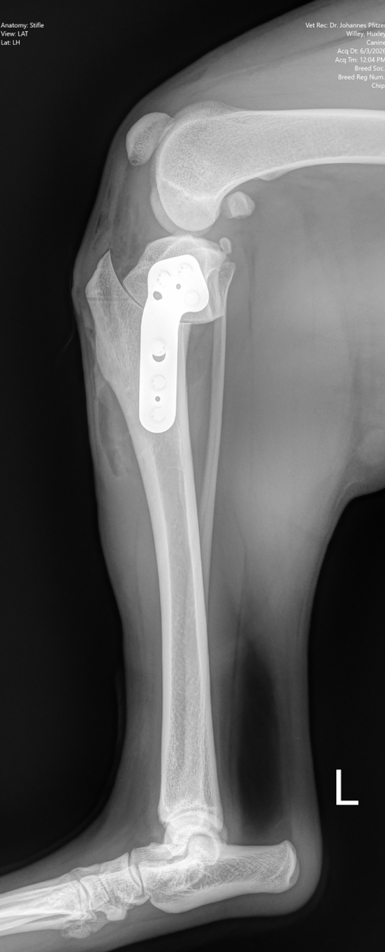
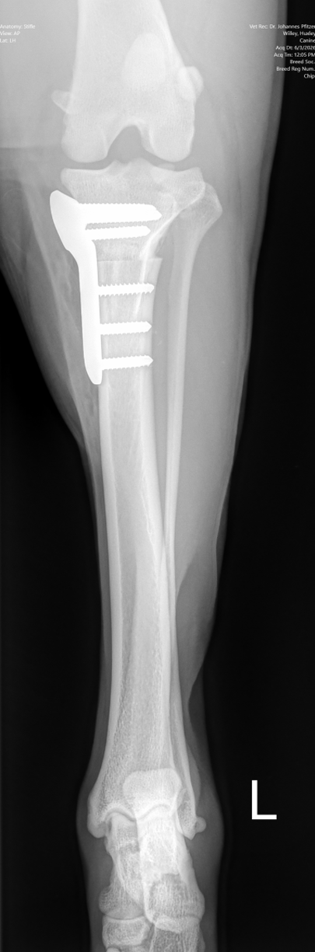
Today, Tibial Plateau Leveling Osteotomy (TPLO) is widely regarded as the gold standard treatment for most medium and large breed dogs with cruciate ligament rupture.
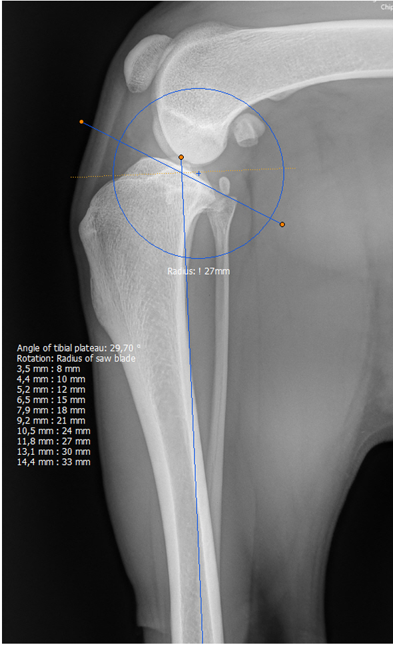
During a TPLO procedure, the angle of the top of the tibia is carefully modified to eliminate the instability that occurs when the cruciate ligament is no longer functioning. Rather than replacing the ligament itself, the surgery changes the biomechanics of the knee, allowing it to function normally and comfortably.
TPLO offers excellent long-term results and is particularly beneficial for active dogs who enjoy running, hiking, playing, and maintaining an active lifestyle.
Recovery After TPLO
Successful recovery requires patience, careful management, and close communication between the veterinary team and the owner.
First 2 Weeks
- Strict rest at home
- Short leash walks for toileting only
- Pain management and monitoring of the surgical site
Weeks 3–8
- Gradual increase in controlled exercise
- Physiotherapy and muscle strengthening exercises
- Continued monitoring of comfort and limb use
Around 8–10 Weeks
- Follow-up radiographs to assess bone healing
- Progressive return to normal daily activities
After 3–4 Months
- Most dogs have regained excellent limb function
- Return to regular walks, play, and many sporting activities
What Is the Prognosis?
The outlook following TPLO surgery is excellent. More than 90% of dogs achieve good to excellent long-term limb function and return to a comfortable, active lifestyle.
With appropriate treatment and rehabilitation, most patients can once again enjoy:
- Long walks
- Playing with family and friends
- Hiking and outdoor adventures
- Running and other physical activities
For Huxley, the prognosis is very encouraging, and we look forward to seeing him back to enjoying life as the happy, energetic Golden Retriever his family knows and loves.
Take-Home Message
Cranial cruciate ligament rupture is one of the most common orthopedic conditions seen in dogs. Early diagnosis and appropriate treatment are key to achieving the best possible outcome. For active medium and large breed dogs, TPLO surgery remains the gold standard, offering excellent long-term comfort, stability, and quality of life.
We wish Huxley a smooth recovery and look forward to seeing him back on four strong paws very soon.